
Union County Sex Offender Checks
The Illinois State Police Offender Registry is the main public source. ISP says it updates daily and supports searches by name, date of birth, city, county, ZIP, compliance status, and combined criteria. Select Union in the county control when location is known, but do not treat a no-result response as proof that no duty to register exists.
Registration generally occurs with a municipal police chief for a municipal resident and the sheriff for an unincorporated-area resident, subject to the exact statutory rule. Copies of registration forms come from the registering agency. Court papers come from the clerk or prosecutor in the county of conviction. The registry is an index and notification record, not the underlying case file.
ISP's Current Union County Registry
The current Illinois State Police registry replaces older ISP search routes and should be the live starting point.
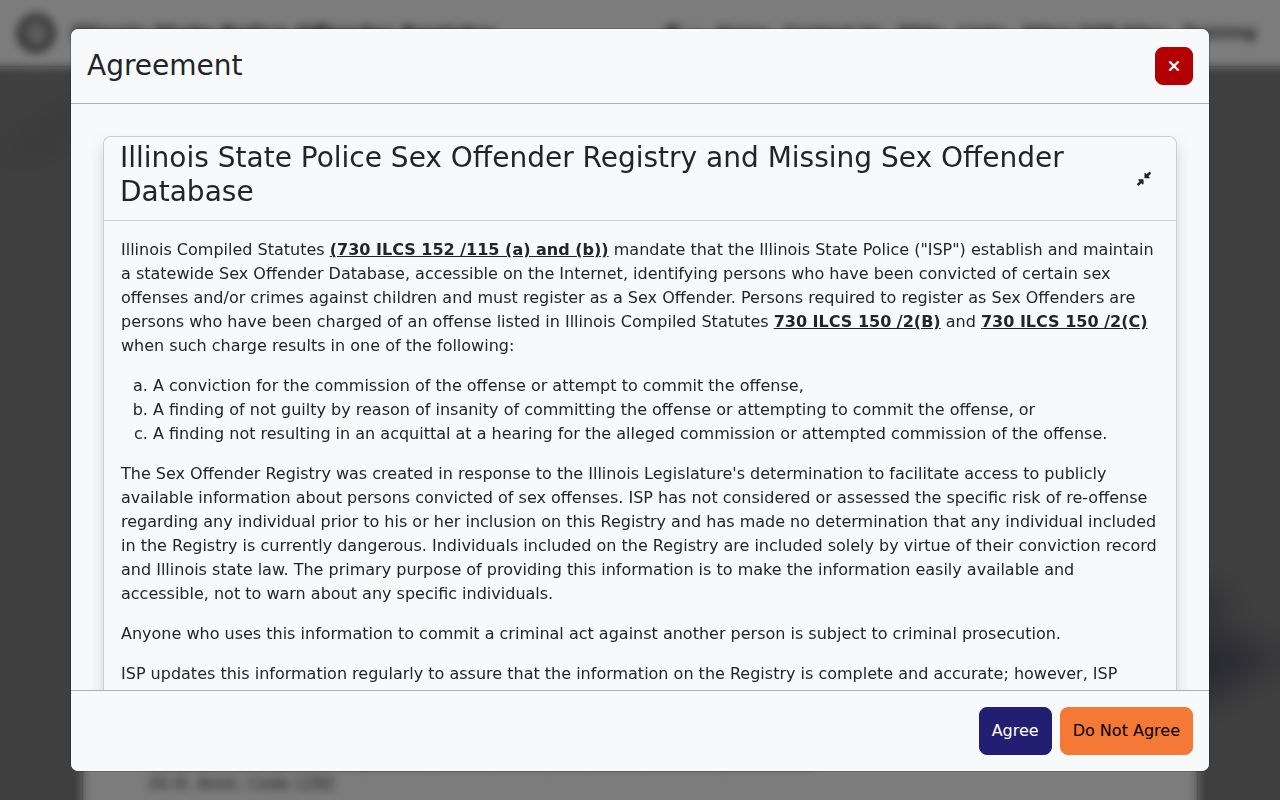
The portal supports Union County filtering, but identity, address, and compliance questions still belong with the law-enforcement agency where the person registers.
Illinois Offender Registry Searches
Begin broadly. ISP recommends first and last name before adding Union County, birth date, city, or status. This reduces the chance that an outdated or slightly different geographic field hides a relevant result.
- Open the ISP registry and review its conditions and search guidance.
- Enter first and last name, then narrow with Union County, DOB, city, or ZIP if needed.
- Compare photos and physical details before deciding that a result identifies the right person.
- Open the profile and read category, address, compliance, offense, registering agency, and update details together.
| Field Label | Type | Required | Notes |
|---|---|---|---|
| First / Last Name | Text | No | ISP recommends starting with both names |
| Date Of Birth | Date/text | No | Use to narrow similar-name matches |
| City / Zip Code | Text | No | Can be combined with other criteria |
| County | Dropdown | No | Select Union; control also covers incarcerated or out-of-state grouping |
| Status / Homeless / Type | Dropdown or checkbox | No | Filters compliance, housing status, or statutory category |
Map Union County Without Assumptions
ISP Map Your Neighborhood accepts an address or map click and displays yellow markers with detail in a side pane.
A marker represents reported registry information, not a person’s real-time location. Confirm a doubtful identity or address with the registering agency instead of visiting a residence.
Registry Profiles: What They Show
Illinois profiles can include identity, physical description, reported location, offense, registration category, and compliance data. Not every field appears on every record, and an absent vehicle, employer, alias, or tattoo does not prove none exists.
| Name & Aliases | Reported primary name and public aliases. |
|---|---|
| Photo & Description | Current image, dated photo history when available, and physical traits. |
| Reported Address | Registry location and jurisdiction, including homeless or out-of-state status where applicable. |
| Offense & Statute | Public conviction description, citation, date, and jurisdiction. |
| Illinois Category | Sex offender, sexual predator, or another statutory classification. |
| Compliance Status | Reported compliance and registering-agency routing information. |
Profile, Court File, and IDOC
A registry profile, conviction file, and correctional-supervision record answer different questions. Use the Union County Circuit Clerk or the clerk in the county of conviction for pleadings and disposition. Use the IDOC Individual in Custody Search for current state custody information. A profile may link to IDOC when supervision applies, but it does not merge these sources.
Photo History can help distinguish people over time. It remains an identification aid, not proof that every other profile field is current at the moment of viewing.
Registration Levels and Duties in Illinois
Illinois does not publish a generic Tier I, II, and III system for these profiles. 730 ILCS 150/2 defines state categories, while Section 7 controls duration. Reporting frequency and change deadlines vary by category and event, so the statute and registering agency should be checked for an individual duty.
| Illinois Category or Circumstance | General Duration | Key Point |
|---|---|---|
| Sex offender outside a lifetime category | Generally 10 years under Section 7 | Start point depends on conviction and custody |
| Sexual predator | Natural life | Illinois statutory category, not a federal tier |
| Sexually dangerous or violent person | Natural life | Applies as the statute specifies |
| Failure to comply | Can add 10 years | Extension begins as Section 7 directs |
Cross State Lines With NSOPW
The U.S. Department of Justice NSOPW federates participating public registries and is useful when a search crosses Illinois borders.
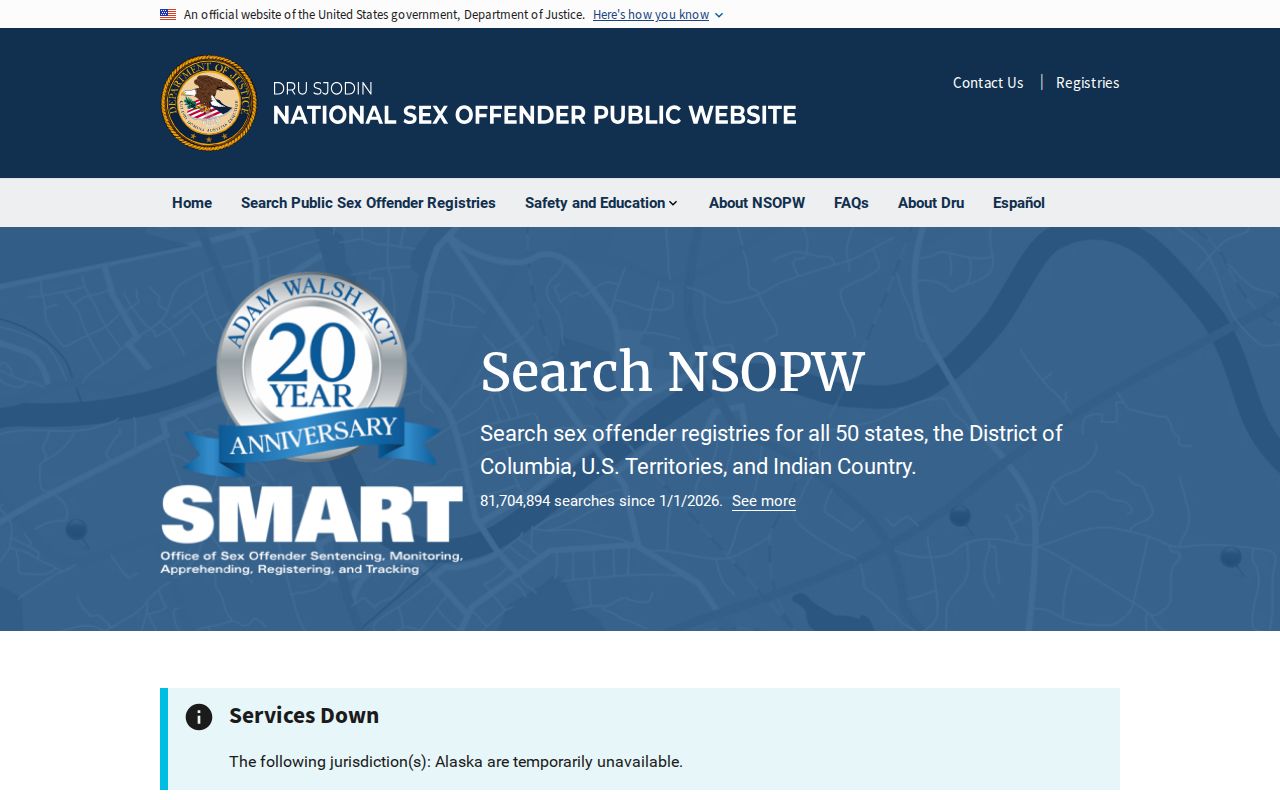
A no-result response can reflect search criteria, jurisdiction participation, delay, or an expired or nonpublic duty. It is not proof of no relevant history.
Using Registry Information Lawfully
The Illinois Sex Offender Community Notification Law supports public awareness and defined disclosures. It does not authorize private punishment. Residence and presence rules also depend on statutory definitions, dates, conduct, and exceptions; do not claim that every registrant faces the same blanket radius restriction.
Statutory misuse warning: Do not harass, threaten, trespass, discriminate unlawfully, or engage in vigilantism because of a listing. Report suspected noncompliance to local law enforcement or ISP at 217-785-0653; never investigate at a residence.
Correct Union County Registry Details
ISP directs accuracy and compliance questions to the agency where the person registers or resides. Bring the exact profile, field in dispute, and reliable supporting information. Registration-form copies come from that agency, while conviction documents come from the appropriate circuit clerk or State’s Attorney.
For an emergency, call 911. For suspected noncompliance that is not an emergency, contact law enforcement rather than confronting the listed person or household.
What the Union County Filter Means
Selecting Union in the county dropdown limits results according to the registry’s reported geographic data. It does not prove that every person connected to Union County appears there, that every displayed address is occupied at that moment, or that a person absent from the result has no registration duty. A person may appear under an incarcerated, out-of-state, homeless, city, or other status, and reporting or search criteria can affect the result.
Run the name search before narrowing when identity is the main question. For an address-based safety question, use the official map and read each profile. When facts conflict, contact the municipal police department or Union County Sheriff that handles the registration. ISP manages the public system, but local registering agencies originate and verify much of the address and compliance information.
Ten Years or Natural Life
For a sex offender who is not placed in a lifetime category, Section 7 generally sets a ten-year period measured from the statutory start point. Confinement changes that start because the period may run after parole, discharge, or release. Sexual predators, sexually dangerous persons released or discharged, sexually violent persons, and people brought into the predator definition by multiple qualifying convictions generally register for natural life.
Failure to comply can extend registration by ten years beginning with the first registration after the violation, as the statute specifies. Reconfinement related to the original conviction can also alter the end date. These rules are why a simple conviction-date calculation is unreliable. Ask the registering agency about the public status and consult the current statute for the category, offense history, custody, and compliance event.
Read Illinois Residence Rules Carefully
Illinois residence and presence restrictions arise from specific Criminal Code provisions, including 720 ILCS 5/11-9.3 for defined child sex offenders. The law contains definitions, location rules, conduct rules, dates, and exceptions. A broad statement that every registrant is barred from every school, park, or child-care location by the same distance would be wrong.
Use the registry to identify the reported category and offense, then consult the current statute or an appropriate official source for the legal rule. Do not use a map pin to measure or enforce a restriction yourself. Suspected violations should be reported to law enforcement. Property owners, neighbors, and members of the public have no authority to threaten, enter property, surveil a household, or compel a person to move based on their own reading of a profile.
Use Photo History for Identity
Illinois’s public profile can include a current main image and dated prior photographs. That history helps when appearance has changed over time or when two people have similar names. Compare the photo with date of birth, height, weight, eye and hair color, scars, marks, tattoos, aliases, and conviction jurisdiction. No single field should carry the full match.
Images are identification aids, not invitations to publish a person’s movements or contact a household. A dated photo does not show current appearance, and a reported address is not real-time tracking. If the profile may identify the wrong person or carries an outdated fact, preserve the URL and field in question and contact the registering agency. Do not crowdsource a correction through social media.
Read Union County Status Fields
The registry includes controls for compliance status, homeless status, offender type, and geographic grouping. These labels describe reported registry conditions, not a complete biography or a new court judgment. An incarcerated or out-of-state grouping affects where a result is found. Homeless status triggers distinct reporting rules and should not be treated as an ordinary fixed address.
When a status seems inconsistent, contact the registering or residence agency. Ask about the public record rather than demanding private details the law does not authorize for release. For the conviction itself, route the request to the circuit clerk in the county of conviction. For custody or mandatory supervised release, use IDOC. Keeping those sources separate prevents a registry update issue from being mistaken for a new offense or court outcome.